
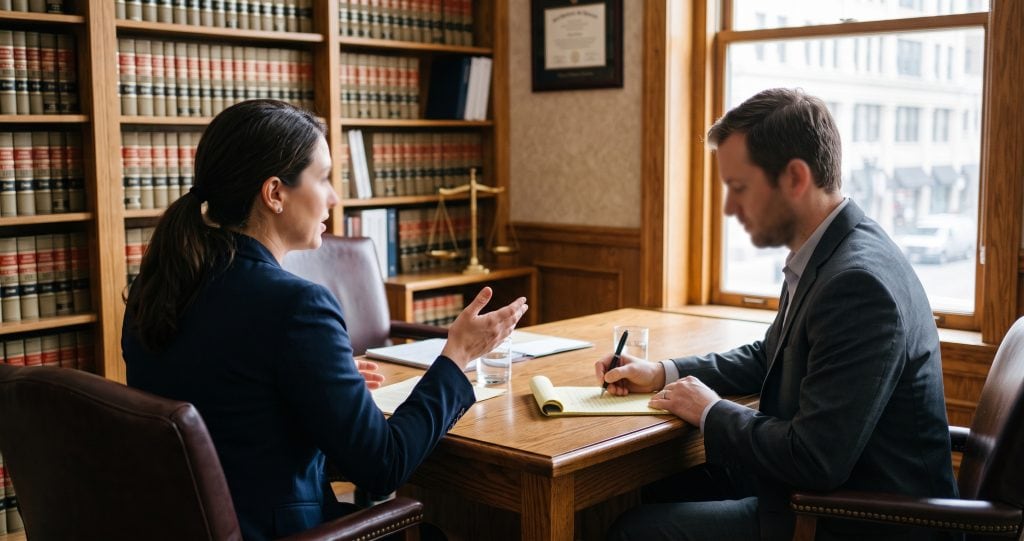
DUI cases run on different evidence, procedures, and deadlines, none of which most general criminal defense questions cover. This is what is worth asking before you hire someone to handle yours.
Questions to Ask Before Hiring a DUI Lawyer
“Have you handled the DHSMV license hearing, not just the criminal case?”
A DUI arrest in Florida creates two separate proceedings: the criminal case, and a driver’s license suspension with a separate 10-day deadline to request a formal review. See our full Bail and Bond Guide for how the arrest and release process works. Ask whether the attorney handles both, and ask how many DHSMV hearings they have done. Some criminal defense attorneys handle the court case but rarely touch the license side.
“Do you have training on field sobriety testing and breathalyzer procedure?”
Field sobriety tests and breathalyzer results are commonly the core evidence in a DUI case, and both can be challenged on procedural grounds: improper administration, uncalibrated equipment, an officer who did not follow protocol. An attorney familiar with the underlying standards for these tests, not just the fact that they exist, is better positioned to find those weaknesses.
“What percentage of your DUI cases go to trial?”
The question is not whether your case should go to trial, but whether the attorney is willing to when the facts support it. An attorney who never tries DUI cases has less leverage in every negotiation, because the prosecution knows a plea is coming regardless of the offer.
“What happens to the breathalyzer or blood test results in my case?”
Ask what your attorney sees when they look at your test results and the circumstances around them. A vague answer here, before the attorney has reviewed anything, is less useful than an honest “I need to see the report first.”
“Will you personally handle the DHSMV hearing and the criminal case?”
These two proceedings sometimes get treated as separate tracks by different people at the same firm. Ask directly whether one attorney is handling both, or whether you will be working with separate attorneys for each piece.
“What is the realistic timeline for a case like mine?”
A first DUI with no complications can move differently than one involving a prior offense, an accident, or an unusually high test result. See our post on what happens after a first DUI in Florida for the general process. Ask for a realistic estimate based on the facts, not a generic answer.
How I answer these
I handle both the criminal case and the DHSMV license hearing personally, and I have represented DUI clients in Miami-Dade since 1989. The 10-day window to request the license hearing does not wait, so the first consultation counts. It is free and confidential, with no obligation to retain.