
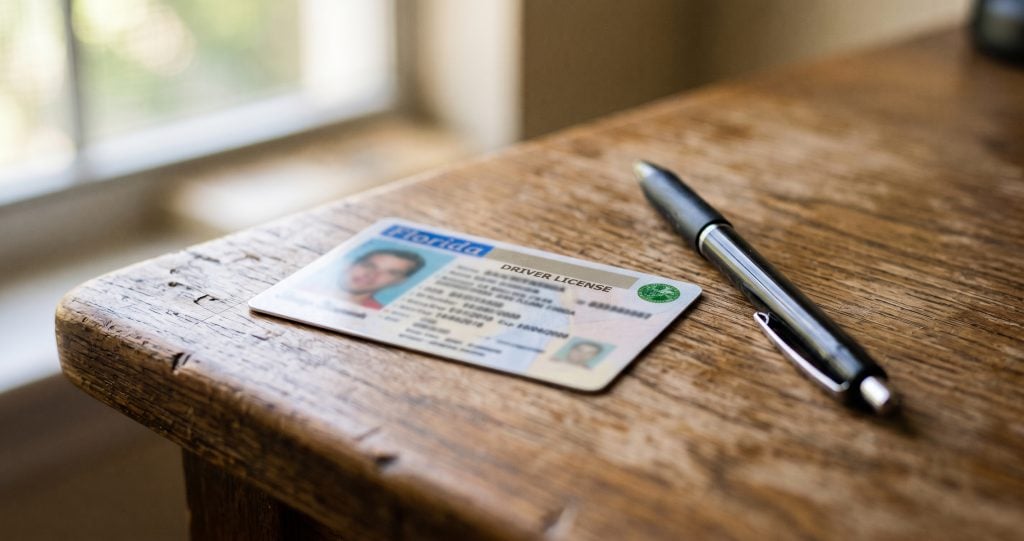
A first DUI arrest is disorienting, and most of what happens in the following days runs on a faster clock than people expect. Two separate processes start at the same time, and one of them moves regardless of what happens with the criminal case.
- License suspension starts at arrest: an administrative suspension can begin immediately, before any court date.
- Just 10 days to contest it: a formal hearing has to be requested within that window or the right to one is lost.
- The interlock device is not universal: it becomes mandatory with a high BAC or a minor in the vehicle.
- Jail is possible but commonly avoided: up to 6 months for a standard first offense, commonly resolved through probation instead.
- It never comes off the record: Florida does not allow a DUI conviction to be expunged or sealed, ever.
- Diversion may be available: some counties offer first-time programs that can reduce the charge.
Frequently Asked Questions
Is my license suspended right away, or just upon conviction?
Commonly immediately, and this catches most people off guard. Florida’s administrative suspension takes effect at arrest if a BAC of 0.08 or higher was recorded, or if a breath test was refused, and it runs separately from the criminal case entirely. This suspension applies even if the DUI charge is later reduced or dismissed, since Florida treats it as a separate licensing action rather than a criminal penalty. Declining the breath test carries additional exposure beyond this suspension, since Florida law now separately criminalizes that choice. See our page on breath test refusal in Florida for how that charge works.
How long do I have to fight that suspension?
Ten days from the date of arrest to request a formal review hearing with the Department of Highway Safety and Motor Vehicles. The citation issued at arrest doubles as a temporary driving permit valid for those same 10 days, and requesting the hearing within that window extends the permit for an additional 42 days while the hearing is scheduled and conducted. Missing that window generally means losing the chance to contest the administrative suspension at all, regardless of how the criminal case eventually turns out, and it ends the temporary permit at the same time. This deadline runs independently and does not wait for an attorney to be retained or an arraignment to be scheduled.
What are the actual penalties for a standard first DUI?
Under Fla. Stat. § 316.193, a standard first offense carries a fine of $500 to $1,000, up to 6 months in jail, up to one year of probation, 50 hours of community service, mandatory DUI school, and a license suspension of at least 180 days. Penalties increase to a fine of $1,000 to $2,000 and up to 9 months in jail when the BAC was 0.15 or higher or a minor under 18 was in the vehicle.
Do I have to install an ignition interlock device?
Not for every first offense. An interlock device becomes mandatory for a first DUI when the BAC was 0.15 or higher or a minor was in the vehicle, generally for a period of six months. Below that threshold, a first offense does not automatically require one, though a judge retains discretion to order it under other circumstances.
Will jail time follow for a first offense?
Rarely. Judges commonly substitute probation, community service, or treatment conditions in place of jail time for a standard first offense without aggravating factors. Jail becomes more probable as the BAC rises, a minor was present, or other circumstances make the case more serious, but it is not the default outcome for most first-time cases.
Will this DUI ever come off my record?
No. Florida law does not allow a DUI conviction to be expunged or sealed under any circumstances, even when adjudication is withheld, per Fla. Stat. § 943.0584. The conviction remains on a driving record for 75 years and stays part of a permanent criminal record. It can also enhance penalties on a future DUI: a second offense within 5 years, or a third within 10, triggers far harsher mandatory penalties than a standalone first offense.
Can the charge be reduced or resolved without a conviction?
Sometimes. Some Florida counties offer diversion programs for qualifying first-time offenders that can result in a reduced charge upon successful completion. Availability and eligibility vary widely by county and by the facts of the arrest, including the BAC level and whether an accident was involved.
What should I do right now after a first DUI arrest?
Note the exact date of arrest, since the 10-day window to request an administrative hearing is calculated from that exact date. Contact an attorney as early as possible, since that hearing request needs to happen well before an arraignment date arrives. See our page on what happens right after an arrest for how the criminal side of the case proceeds in parallel.
If this just happened to you
Every DUI case turns on the facts of the stop, the testing involved, and the county handling it, and that requires a real review, not a guess. Cases in Miami-Dade are handled locally, through the Eleventh Judicial Circuit.
The first consultation is free and confidential, with no obligation to retain.