
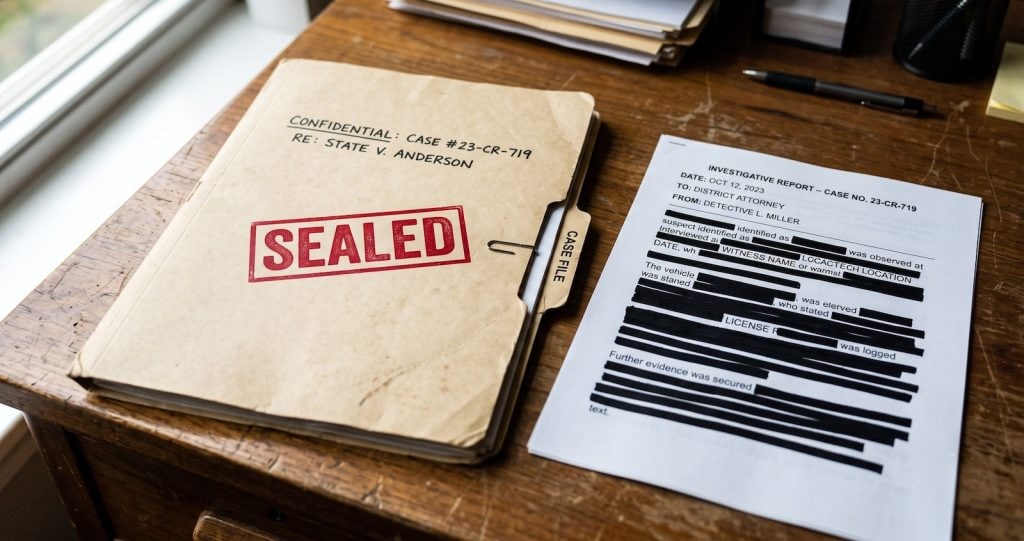
An arrest alone, even without a conviction, can appear on a standard background check. This surprises a lot of people, who assume convictions alone show up.
Frequently Asked Questions
What generally appears on a background check after an arrest?
Arrest records are public in Florida, meaning an arrest, the charges filed, and the disposition of the case, whether it was dismissed, resulted in a plea, or went to trial, can all potentially appear on a background check, even if the case never resulted in a conviction.
Does this stay relevant even if charges were dismissed?
A case being dismissed does not automatically remove the arrest record from public access. Without taking a further step, sealing or expungement, the arrest can remain visible to employers, landlords, and licensing boards conducting a background check.
What is the difference between sealing and expungement?
Sealing restricts a record from public view while keeping it accessible to certain government and law enforcement purposes. Expungement goes further, in most cases physically destroying the record, though limited exceptions can still apply. See our Legal Terms Glossary entry on the difference between the two. Which one is available depends on how the case was resolved and your eligibility under Florida rules.
What generally makes someone eligible for sealing or expungement?
Eligibility depends on factors like whether the case was dismissed or resulted in a withhold of adjudication, whether you have other criminal history, and the nature of the original charge. Certain serious offenses are not eligible regardless of the outcome.
Why is this worth addressing early rather than later?
Waiting until a background check causes a problem, a denied job application, a denied lease, means dealing with the consequence after it has already happened. Addressing eligibility for sealing or expungement early avoids that. A record can also affect a firearm purchase, which runs through its own FDLE check, and a juvenile finding can disqualify a buyer until age 24; see our post on gun rights with a juvenile record in Florida.
What should I do if I have an arrest on my record?
Whether your situation qualifies for sealing or expungement depends on the details of the case. The first consultation is free and confidential, with no obligation to retain.