
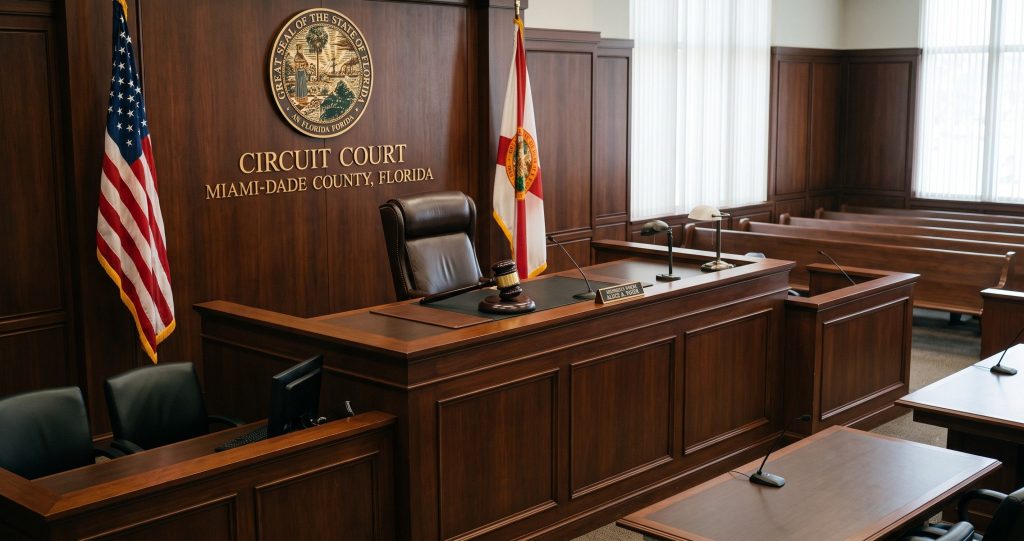
As of July 1, 2026, Florida’s Missy’s Law requires a court to immediately remand a person to custody, with no possibility of bond, the moment they plead guilty, plead no contest, or are found guilty of a dangerous crime. The requirement applies while they wait for sentencing, even if they plan to appeal.
What is Missy’s Law?
Missy’s Law, formally House Bill 445, took effect July 1, 2026. It is named for Melissa “Missy” Mogle, a five-year-old whose 2025 death in Tallahassee occurred while a person previously convicted of an unrelated offense remained free on bond awaiting sentencing. The law was written to close that specific gap in Florida’s pretrial detention rules.
What triggers immediate custody under this law?
Three events trigger it: a guilty plea, a plea of nolo contendere, or a finding of guilt at trial, for any offense on Florida’s expanded list of dangerous crimes. Once one of those happens, the court must remand the person to custody right away. There is no bond available while sentencing is pending, regardless of whether the person intends to file an appeal.
What counts as a dangerous crime under this law?
The list runs to 27 categories, including aggravated assault, aggravated battery, robbery, carjacking, kidnapping, manslaughter, sexual battery, arson, and abuse of an elderly or disabled adult. Missy’s Law also expanded this list to add certain computer pornography and child exploitation offenses, which now carry the same immediate-custody requirement.
What changed from how this worked before?
Before this law, a judge had discretion to let a convicted person remain free on bond between conviction and sentencing. Missy’s Law removes that discretion entirely for the listed offenses. The plea or verdict itself is now the trigger for custody, not the sentencing hearing that may follow weeks or months later.
Why does this matter for plea negotiations?
This changes the calculation for anyone weighing a plea on a qualifying charge. Under the old rule, a person could often remain out on bond between entering a plea and being sentenced, sometimes for weeks or longer. Under Missy’s Law, entering a guilty or no contest plea on a qualifying charge now means custody the same day, regardless of what the eventual sentence turns out to be. That timing is now part of every plea conversation on these charges, not an afterthought.
Does this affect a no contest plea differently than a guilty plea?
No. Missy’s Law treats a plea of nolo contendere the same as a guilty plea for purposes of triggering immediate custody. That said, the two plea types are not identical in every respect. In Florida, a no contest plea still cannot be used as an admission of guilt in a related civil case, unlike a guilty plea. See our Legal Terms Glossary for the full Nolo Contendere entry and how that distinction works.
What should I do if I am facing a charge on this list?
Understanding whether a specific charge falls under Missy’s Law, and what that means for the timing of any plea decision, is now a real part of case strategy on these charges. This is not something to work out after a plea is already on the table. See our Bail and Bond Guide for how this fits into Miami-Dade bond procedure more broadly, and call before any plea decision is made, not after.
The first consultation is free and confidential, with no obligation to retain.