
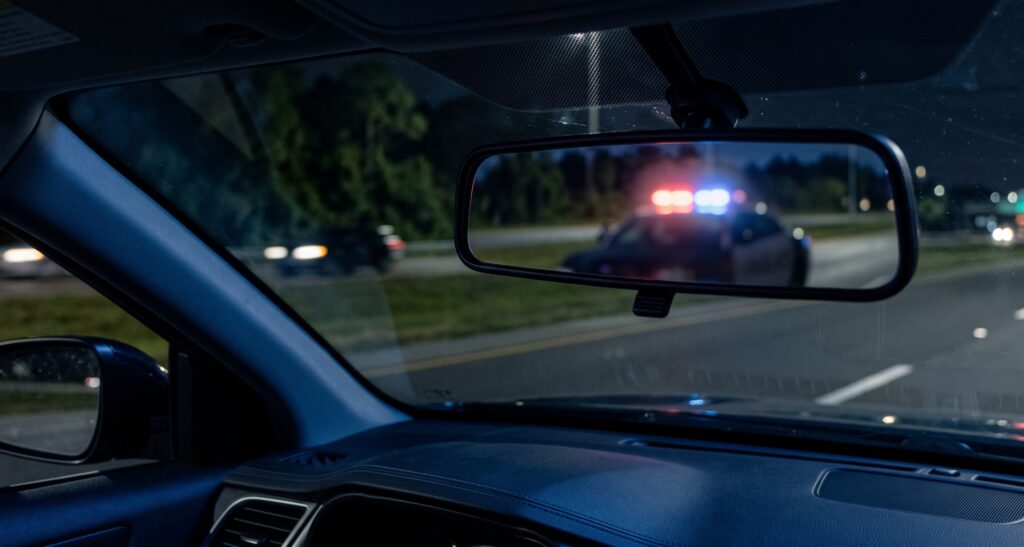
No, not by itself, in most of Florida. For decades, an officer who smelled marijuana coming from a car had all the legal justification needed to search it. Florida’s legalization of hemp broke that rule, because hemp and marijuana smell identical, and two Florida appeals courts have now said so directly. Miami-Dade sits in a gap where the rule has not been formally settled, though the practical answer here still favors the driver. Broward is different again, with a district court ruling that still allows it.
Questions About Marijuana Odor and Vehicle Searches in Florida
Can police search my car in Florida just because they smell marijuana?
Not anymore, in most of the state. For decades, the smell of marijuana alone was treated as automatic probable cause to search a car. Florida’s legalization of hemp changed that, since hemp and marijuana smell identical. Two appeals courts have now ruled that odor by itself is not enough, though the rule is not yet uniform everywhere, including in Miami-Dade.
What did the Baxter case decide?
In Baxter v. State, 389 So. 3d 803 (Fla. 5th DCA 2024) (en banc), Florida’s Fifth District Court of Appeal, sitting as a full panel, held that the smell of cannabis alone can no longer support even reasonable suspicion for a detention, let alone probable cause for a search. The court pointed to Florida’s legalization of hemp, which is chemically similar to marijuana and smells the same, as the reason odor alone no longer distinguishes lawful conduct from a crime.
What is the difference between reasonable suspicion and probable cause?
Reasonable suspicion is the lower standard, needed for an officer to briefly detain someone, such as ordering everyone out of a car during a stop. Probable cause is the higher standard, needed to search the vehicle or make an arrest. Baxter held that marijuana odor alone cannot meet even the lower bar of reasonable suspicion, which means it cannot meet the higher bar of probable cause either.
Is Baxter isolated, or has this spread to other courts?
Florida’s Second District Court of Appeal, sitting en banc, reached the same conclusion in Williams v. State, 421 So. 3d 809 (Fla. 2d DCA 2025), decided October 1, 2025, receding from an earlier ruling that had gone the other way. Between Baxter and Williams, two of Florida’s district courts of appeal have now rejected odor-alone searches, and that court also certified the question to the Florida Supreme Court for a statewide answer.
Does this rule apply in Miami-Dade?
It is not yet settled here the way it is in the Second and Fifth Districts. Miami-Dade falls under the Third District Court of Appeal, and in Aldama v. State, decided July 2024, that court declined to rule on whether smell alone is enough, deciding the case on other grounds instead. No Third District case has adopted Baxter outright, and none has rejected it either.
If the Third District hasn’t ruled, what happens in a Miami-Dade courtroom right now?
Under a doctrine known as the Pardo rule, a Florida trial court without controlling precedent from its home district generally follows the rulings of whichever district courts of appeal have addressed an issue, at least when those other districts agree with each other. That is what makes the current moment complicated: Baxter and Williams point one way, but Fortin, out of the Fourth District, points the other way, and the Third District has not broken the tie. A Miami-Dade judge is not bound to follow either line of cases, which is part of why this may end up before the Florida Supreme Court for a final answer.
Is the rule different in Broward County?
Yes, and this is important if you were stopped there instead of Miami-Dade. Broward falls under the Fourth District Court of Appeal, which reaffirmed the older rule in State v. Fortin, 383 So. 3d 820 (Fla. 4th DCA 2024), holding that the smell of marijuana, fresh or burnt, still provides probable cause for a vehicle search. Unlike Miami-Dade, where the Third District has not decided the question, Broward has a binding decision going the other way. That does not end the analysis, since the Florida Supreme Court could still resolve the statewide conflict, but for now a Broward stop is governed by a different rule than a Miami-Dade stop.
What is the “odor-plus” standard?
It is what most agencies and prosecutors now rely on instead of smell by itself. “Odor-plus” means the smell of marijuana combined with something else: nervous or evasive behavior, visible contraband, an admission, erratic driving, or dispelling every lawful explanation for the smell. In the Aldama case out of Miami-Dade, the troopers asked the driver directly whether he had a medical marijuana card or any legal hemp, and he said no to both. That exchange, not the smell by itself, is what the court relied on to uphold the search.
Does having a medical marijuana card change anything?
It can. Florida officers are generally trained to ask about a medical marijuana card or legal hemp once they detect an odor, precisely because either one provides a lawful explanation for the smell. Answering honestly, and having documentation available, can be part of what keeps a stop from turning into a search.
Does it change anything if the smell is fresh marijuana rather than burnt?
Courts have started treating burnt odor as carrying more weight, because it suggests active use rather than mere possession, and smoking marijuana inside a vehicle is illegal in Florida even with a valid medical marijuana card. In Cherfils v. State, No. 2D2023-1932 (Fla. 2d DCA Dec. 31, 2025), the Second District upheld a search where an officer smelled burnt marijuana and the driver then handed over a medical marijuana card and admitted to smoking earlier that day. The court found that combination, not the smell by itself, was enough. Baxter applies to both fresh and burnt odor, but burnt smell paired with an admission is the kind of “odor-plus” fact pattern that still holds up in the districts that have adopted it.
What about a K-9 alert? Doesn’t a drug dog change the analysis?
Not automatically, at least in the Fifth District. In Ford v. State, 400 So. 3d 838 (Fla. 5th DCA 2025), the court held that an alert from K-9 Polo, a dog trained to detect marijuana but not trained to tell it apart from legal hemp, could not establish probable cause on its own. A dog trained to alert differently to cannabis than to other drugs could still supply probable cause without anything more; the problem in Ford was a dog whose alert carried one meaning whether the substance was legal or not.
If my case involved a search based on smell and nothing else, what happens next?
A search built on odor alone, without any of the additional facts courts have accepted as “plus” factors, is a strong candidate for a motion to suppress. If the motion succeeds, the State generally cannot use whatever was found during that search, which can be the entire case against a defendant. Whether that motion wins in Miami-Dade turns on the facts of the stop itself, since the law here has not been finally settled the way it has in the Second and Fifth Districts.
What should I do if an officer says they smell marijuana during a stop?
Stay calm, keep your hands visible, and avoid volunteering information beyond what is required, such as your license, registration, and proof of insurance. You are not required to consent to a search, and saying so clearly and once is enough. Whether the officer proceeds anyway is a separate legal question for later, and arguing about it on the roadside rarely helps. See our guide on what to do if you are arrested in Miami-Dade County for the steps that follow a search.
Why Hemp Legalization Changed Everything
The entire shift traces back to one fact: legal hemp and illegal marijuana are the same plant, chemically distinguished mainly by THC content, and the scent is indistinguishable to a human nose and to a trained dog. Before hemp was legal, smelling marijuana meant an officer had detected something that was, by definition, illegal. That is no longer true, and Florida’s courts have started to catch up with that reality, district by district rather than all at once.
Where This Law Still Allows a Search
Marijuana remains illegal to possess recreationally in Florida, and a car can still be searched under the right circumstances. An officer who smells marijuana and observes something else, from nervous behavior to an admission to visible paraphernalia, still has a real path to probable cause under the odor-plus standard. What has changed is that the smell alone no longer does all the work.
If You Were Searched Based on Odor Alone
Whether a search in your case can be challenged depends on what the officer relied on, and whether anything beyond the smell itself was present. That is a question worth reviewing with an attorney rather than guessing at. Calls to this office reach me, Andre Rouviere, directly. The first consultation is free and confidential, with no obligation to hire the firm. If it’s after hours or the weekend, the office keeps a 24-hour answering service.