
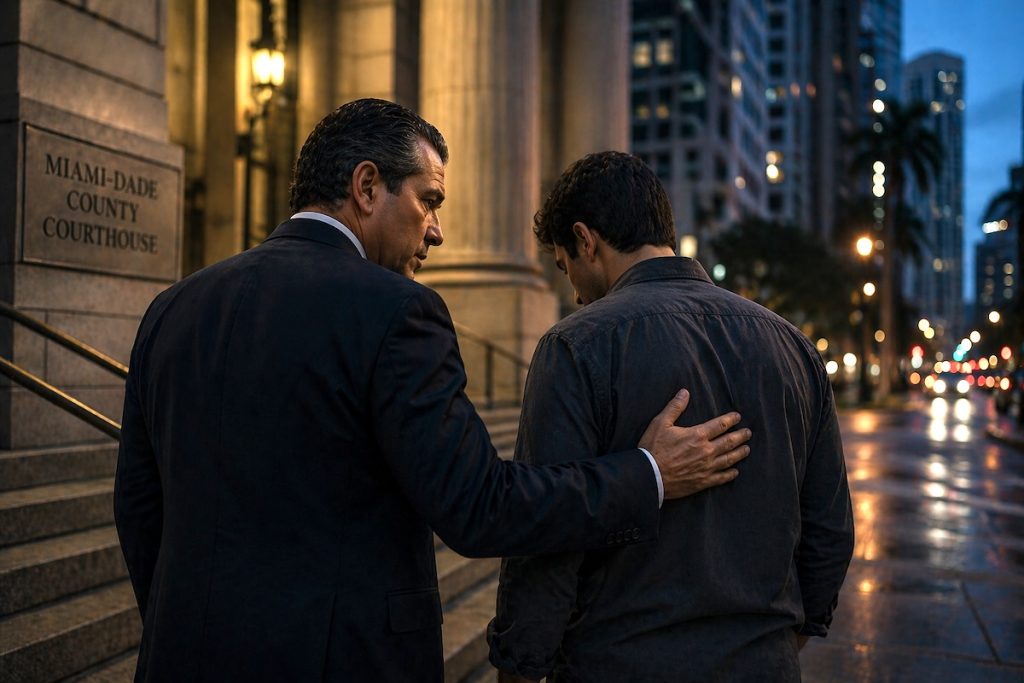
Many people hire the first lawyer they talk to, which puts a lot of weight on that first conversation. Below is what to ask, and why the answer carries weight. If you have not made that first call yet, see whether you can call a lawyer and ask a question for free for what a consultation covers and what stays confidential.
“Will you personally handle my case, or does it get passed to someone else?”
At larger firms, the person you meet during the consultation is commonly not the person who shows up at your hearings. Ask directly: who drafts the motions, who takes the depositions, who stands next to you in court. If the answer involves an associate or a case manager you have not met, know that going in.
“Have you handled cases like mine, and what happened?”
A general criminal defense attorney and one who focuses heavily on a narrow area both have their place, but the honest question is whether they have handled your type of case before, not just criminal defense broadly. Ask what happened in similar matters. A vague answer is worth noticing.
“What’s the difference between a public defender and hiring you?”
A public defender is appointed when a judge finds a defendant indigent, and the Miami-Dade Public Defender’s office represents people who may lose their liberty and cannot afford a private attorney. A private attorney is chosen by the client and can be retained before first appearance to meet with you and review the facts before the hearing. Whether that applies to your situation is worth discussing directly. Our guide to public defender or private lawyer in Miami-Dade covers cost and appointment.
“How do you communicate during the case?”
Some firms route everything through a paralegal. Some attorneys respond to calls and texts personally. Ask what that looks like in practice, not just what the firm’s marketing says. You are going to want direct answers during a stressful few months, and the structure of the firm determines whether you get them.
“What does this cost, and how is it structured?”
Ask for the fee structure in writing before you commit to anything: flat fee, hourly, what phases are covered, what happens if the case goes to trial instead of resolving early. A written fee agreement protects both sides. Our post on what it costs to hire a lawyer in Miami goes into more detail on this.
“What outcome are you aiming for?”
A vague promise of a favorable outcome is not the same as a strategy. Ask what the realistic paths look like given the facts as you have described them: dismissal, reduced charges, a negotiated resolution, or trial. An attorney who has thought this through should be able to walk you through it, even in a first conversation.
“What happens if the case does not go the way we hoped?”
Not every case ends the way anyone wants. Ask whether the attorney handles appeals and post-conviction matters, or whether that would require finding someone new at a later, harder stage. See our Appeals and Post-Conviction page for how that work is handled separately. Knowing the answer now avoids a scramble later.
How I answer these
I handle every case personally. There is no associate who takes over after intake and no case manager between you and me. I read the file, prepare the motions, and appear at hearings myself. The first consultation is free and confidential, with no obligation to retain, and it’s the right place to ask any of the questions above.